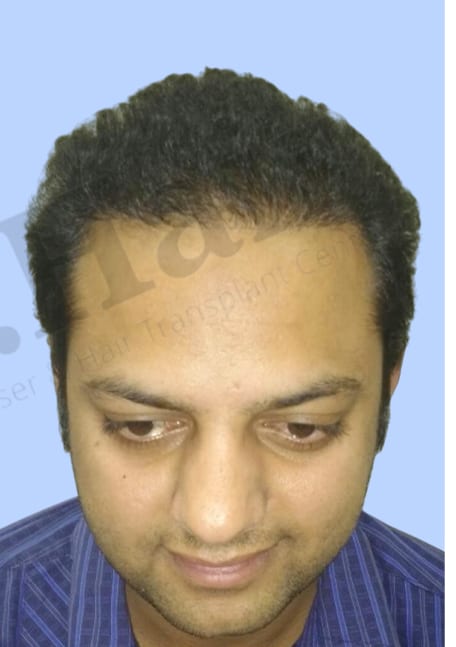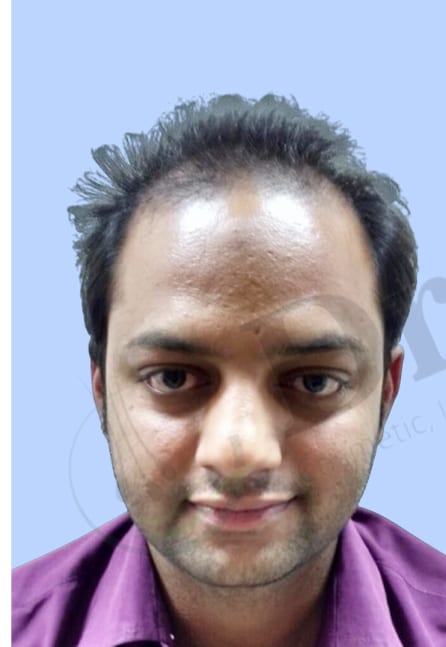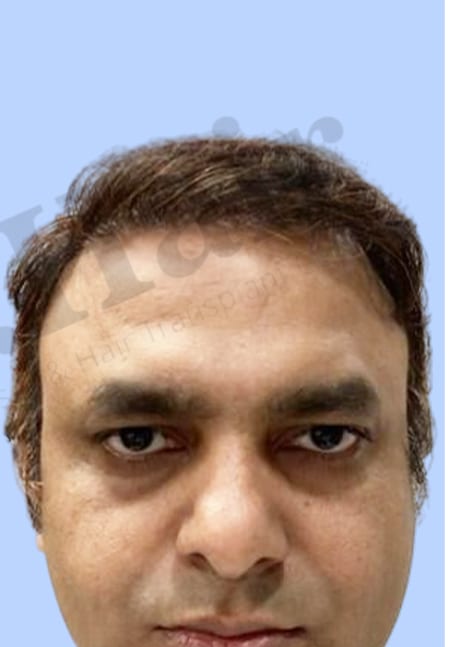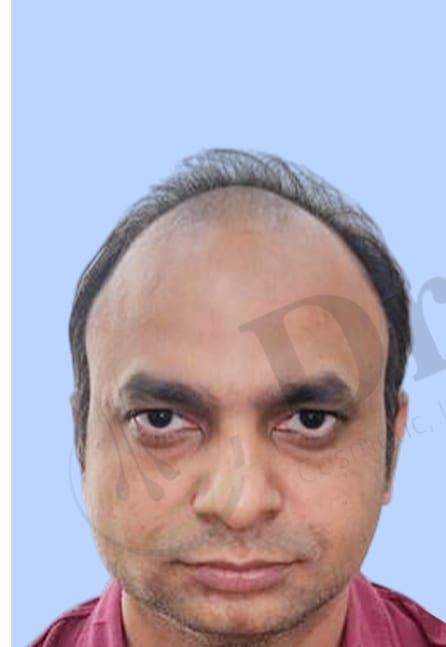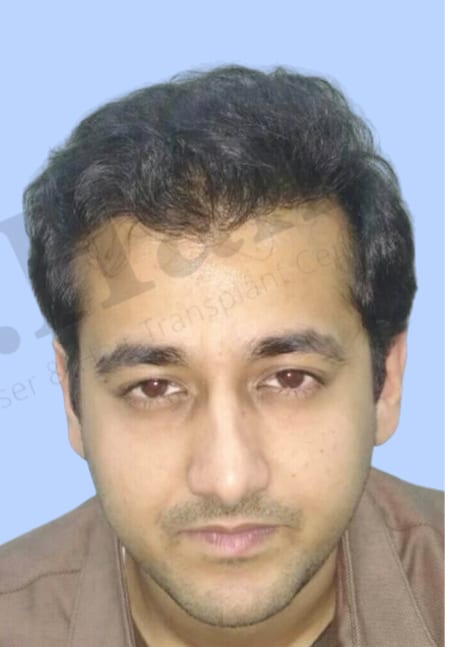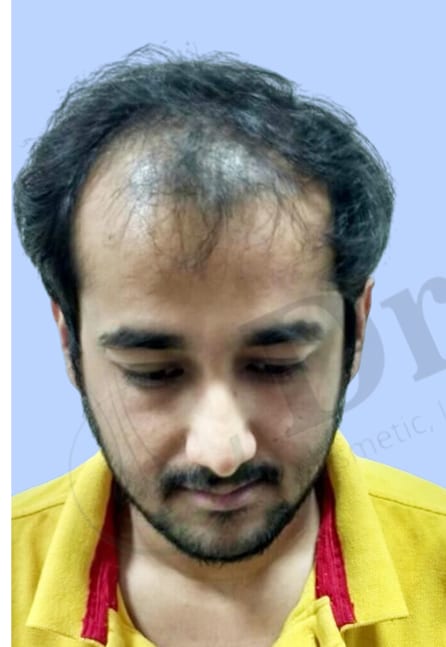
Follicular Unit Extraction (FUE) moves hair follicles one at a time from the back and sides of your scalp to areas that are thinning or bald. It is now the more commonly used of the two main hair transplant techniques, and suits most people with pattern hair loss who have enough donor hair.
It is done under local anaesthesia, leaves tiny dot scars rather than a line, and most people are back at desk work within a few days. As with any transplant, the result depends on your donor supply, how the hairline is designed and how your hair loss progresses afterwards.
What is an FUE hair transplant?
In FUE, individual follicular units — the natural groups of one to four hairs in which hair grows — are extracted with a fine punch, usually from the back and sides of the scalp. If scalp donor hair is limited, beard or chest hair can sometimes be added. The grafts are then implanted into small incisions in the thinning areas, placed at the angle and direction of your natural hair.
How is FUE performed?
- Planning – the hairline and the areas to be covered are agreed and marked, and the number of grafts is estimated.
- Anaesthesia – the donor and recipient areas are numbed with local anaesthetic. You stay awake; once the area is numb, most people feel pressure rather than pain.
- Extraction – the donor area is usually trimmed short, and grafts are taken one at a time, spread out so the area does not look thinned.
- Implantation – grafts are placed into small incisions made at the right angle, direction and density for a natural-looking result.
- Duration – a session usually takes most of a day, depending on the number of grafts.
Who is a good candidate for FUE?
- Men and women with pattern hair loss and a healthy, stable donor area
- People who keep their hair short and want to avoid a linear scar
- People who need a small to moderate number of grafts, or refinement of the hairline
- Those who want beard, eyebrow or moustache transplants
- Patients needing correction of an earlier transplant, if donor hair allows
FUE may not be the right first step if your hair loss is progressing quickly, if your donor area is thin, or if the cause of your hair loss has not been diagnosed. In those cases medical treatment, or a different technique, may be advised first.
Recovery after FUE
- First few days – swelling of the forehead, tenderness and small crusts around each graft are common.
- Days 7–10 – the crusts fall away with gentle washing, and the small wounds in the donor area heal.
- Weeks 2–4 – most transplanted hairs shed. This is expected; the follicles stay in the scalp.
- Months 3–4 – new hair starts to grow, fine at first.
- Months 6–9 – the change is most visible. The final result is usually seen at around 12 months, and the crown can take longer.
Most people return to desk work within three to five days. The hair transplant aftercare guide and the hair growth timeline on this site cover each stage in more detail.
What are the risks and side effects of FUE?
Side effects are usually mild and temporary: swelling, scabbing, redness, numbness of the scalp, and pimple-like bumps (folliculitis) as new hairs grow through. Some people notice temporary shedding of existing hair near the grafts (shock loss), which usually regrows. Infection is rare.
FUE leaves many tiny dot scars in the donor area. They are usually hidden by surrounding hair, but can show if the head is shaved very close or if the donor area has been over-harvested.
Transplanted follicles come from an area that is generally resistant to pattern hair loss, so they usually keep growing long term. The native hair around them can continue to thin, which is why your surgeon may also recommend medical treatment.
Who performs FUE at DR HAIR® India?
- Dr. Jai Bansal – 15+ Years of Expertise in Hair Transplants
- Dr. Bansal has performed more than 4,000 hair transplant procedures
- Patients travel to the Jaipur and Delhi clinics from across India and abroad
Is it the right option for you?
Every plan starts with an examination. Dr. Bansal will tell you whether FUE hair transplant fits your case — including when it does not.