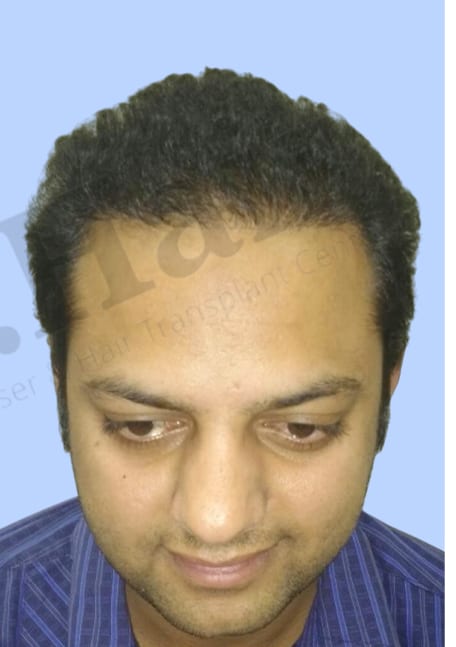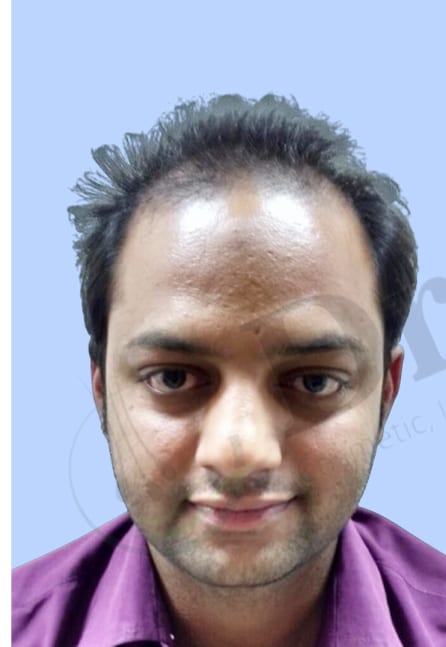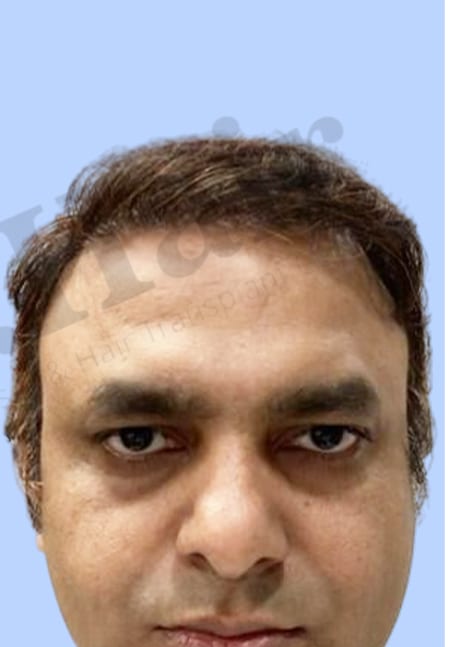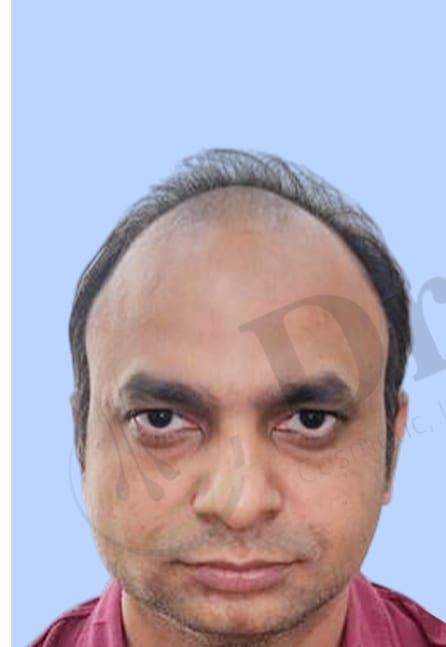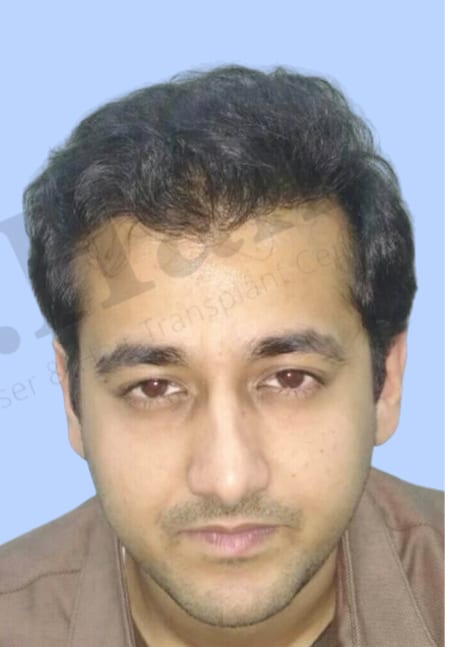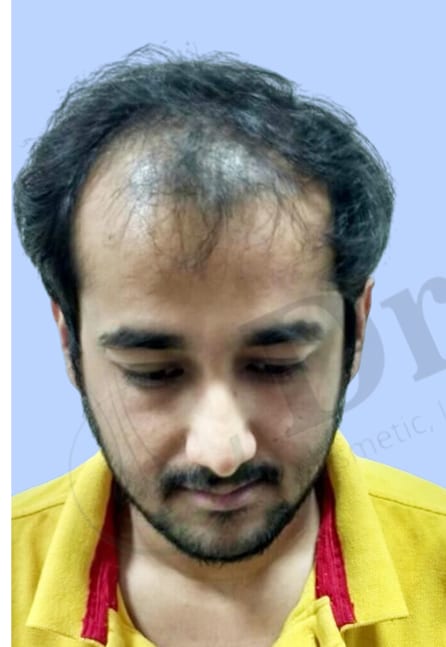
Direct Hair Implantation (DHI) is a variation of FUE. Grafts are extracted one at a time in the same way, then implanted with a pen-shaped implanter that makes the opening and places the graft in a single step.
This gives fine control over angle, depth and direction, which is useful for hairlines and dense placement. DHI is not scar-free — extraction leaves the same tiny dot scars as FUE — and it is usually slower and more expensive per graft.
What is Direct Hair Implantation (DHI)?
Each graft is loaded into the hollow needle of an implanter pen and placed directly into the scalp as the needle makes the opening. Because the incision and implantation happen together, grafts can spend less time outside the body, and smaller cases can sometimes be done without shaving the recipient area. Donor extraction, local anaesthesia and aftercare are the same as for FUE.
Who is DHI suitable for?
- Men and women with hair loss, bald patches or thinning hair who have a healthy donor area
- Hairline design and areas that need dense, precise placement
- Beard, eyebrow and moustache restoration, where control of the angle matters most
- Correction of earlier transplants that look unnatural, if donor hair allows
How does DHI differ from standard FUE?
- Graft survival – less time outside the body may help, but survival depends mostly on careful handling and the surgeon's technique, whichever method is used.
- Scarring – the donor area has the same tiny dot scars as FUE, usually hidden by hair. The implanter also makes small openings in the recipient area, which heal as the crusts fall away.
- Density – grafts can be placed close together at a consistent angle and depth; how dense the result can be is still limited by your donor supply.
- Recovery – similar to FUE: crusts for about a week to ten days, shedding at two to four weeks and new growth from three to four months. Most people return to desk work within a few days.
- Time and cost – DHI is slower per graft, so very large sessions may combine DHI with standard FUE implantation.
Who performs DHI at DR HAIR® India?
- Dr. Jai Bansal – 15+ Years of Experience in Hair Transplant & Cosmetic Surgery
- Dr. Bansal has performed more than 4,000 hair transplant procedures
- Patients travel to the Jaipur and Delhi clinics from across India and abroad
What are the risks of DHI?
The risks are the same as for FUE: temporary swelling, scabbing, redness, numbness and folliculitis, temporary shedding of nearby native hair (shock loss), and, rarely, infection or poor growth. Results vary between individuals and depend on donor supply, the pattern of hair loss and aftercare.
Whether DHI, standard FUE or another approach suits you depends on your hair loss and donor area, and is decided at consultation.
Is it the right option for you?
Every plan starts with an examination. Dr. Bansal will tell you whether DHI hair transplant fits your case — including when it does not.